There’s something effortlessly joyful about florals in the home. Whether you’re refreshing a room for the new season or planning a full makeover, floral fabrics and bold colour pairings are a timeless way to inject character and charisma into your space.
And the best part? You don’t need to redecorate from top to bottom. Just a few well-chosen updates can completely transform a room.
Why Florals Work So Well
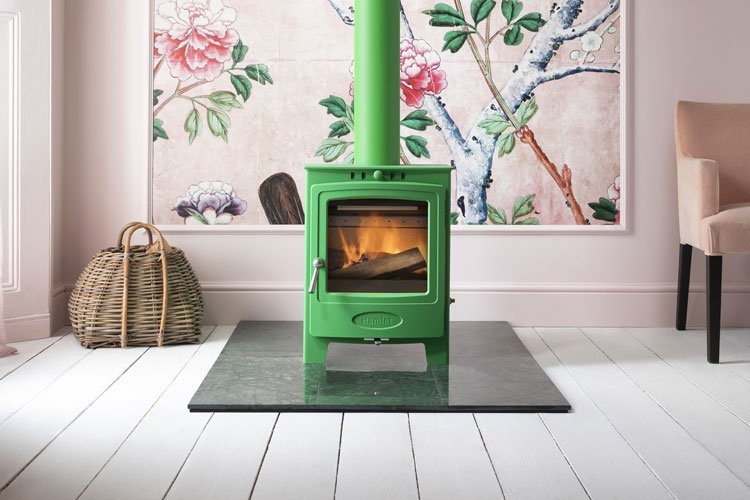
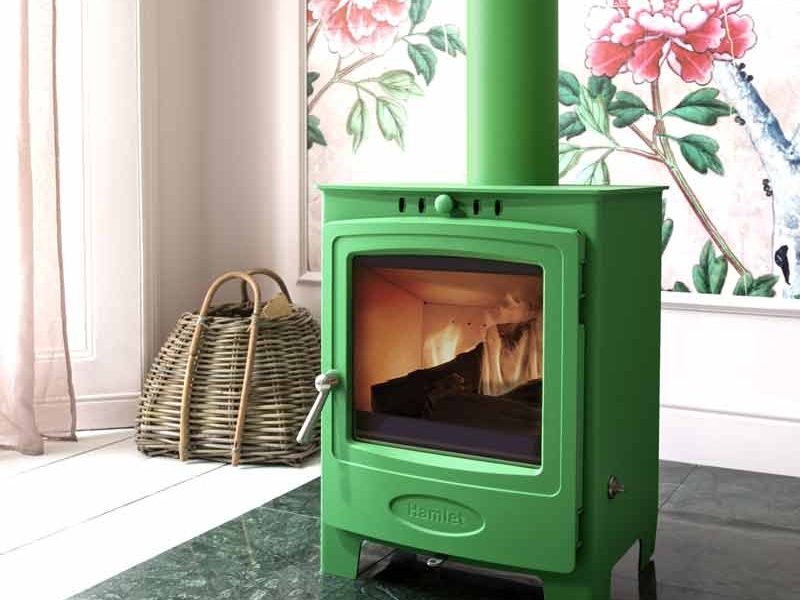
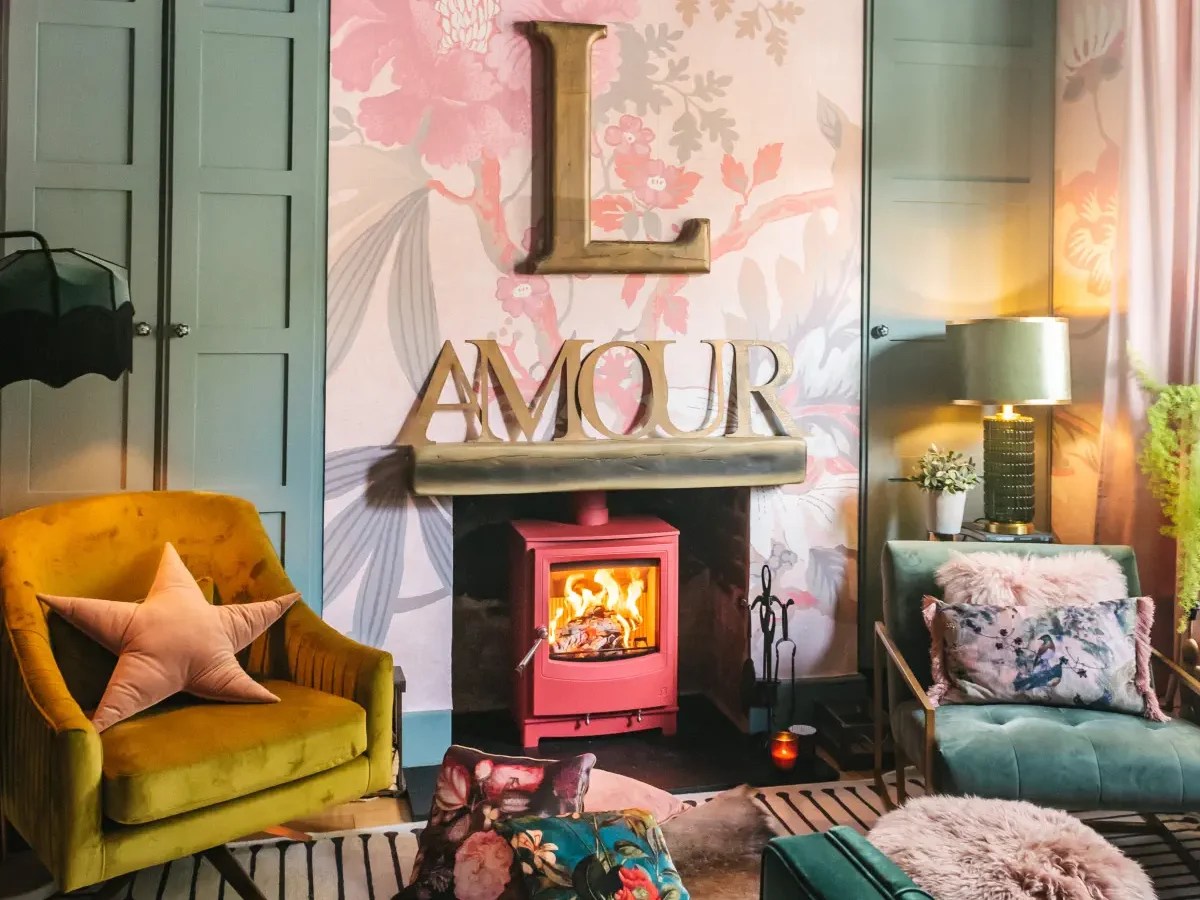
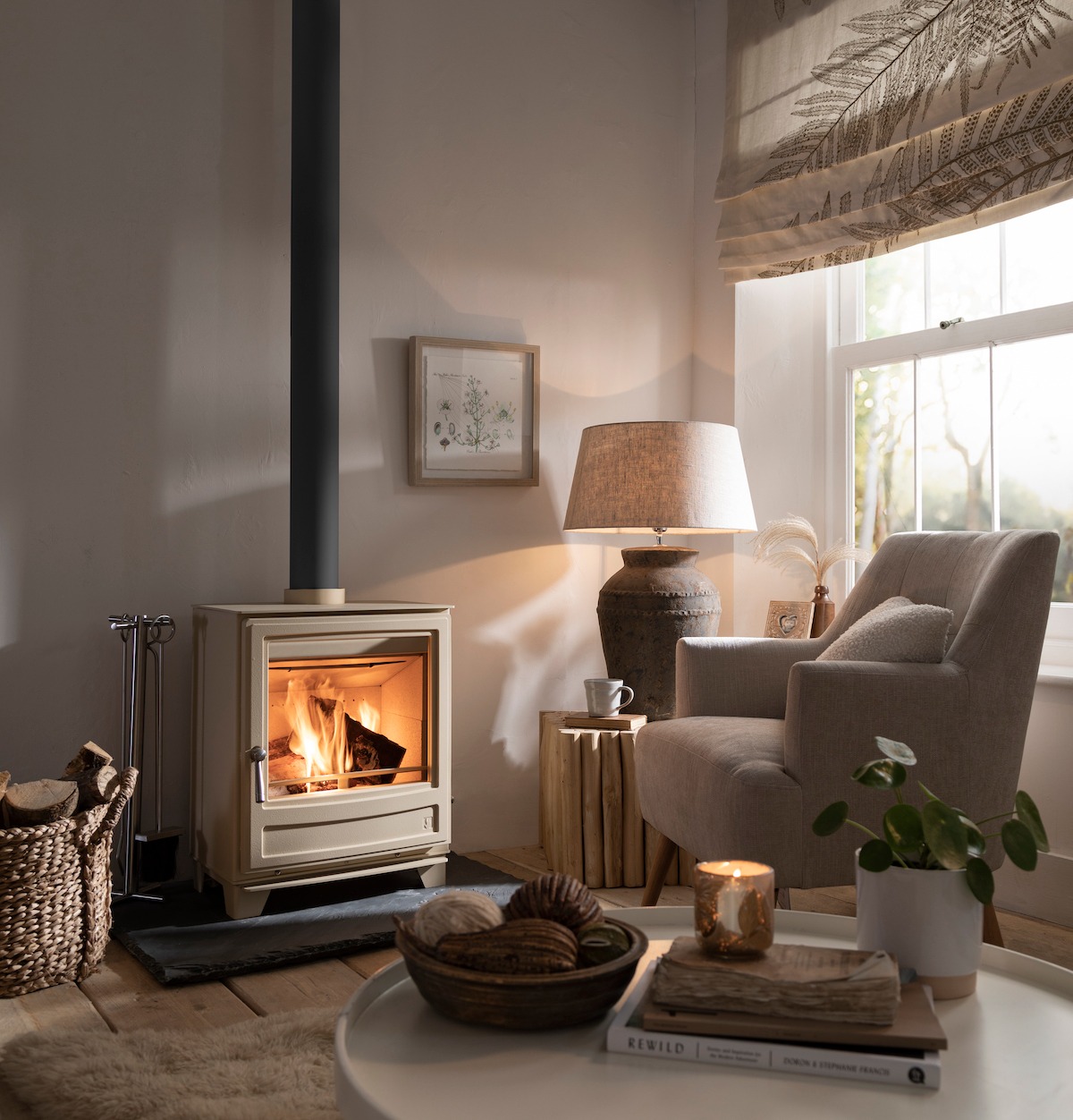
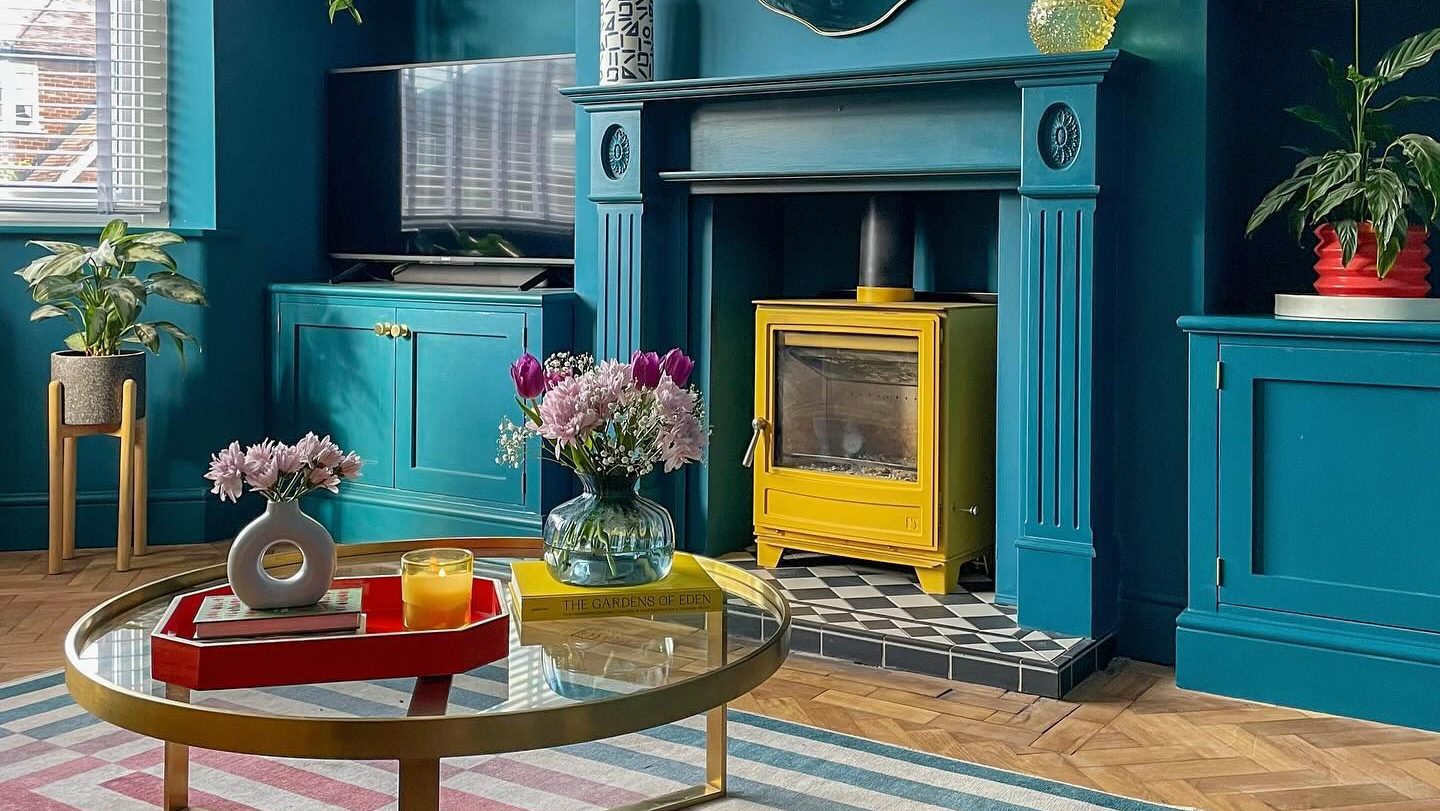
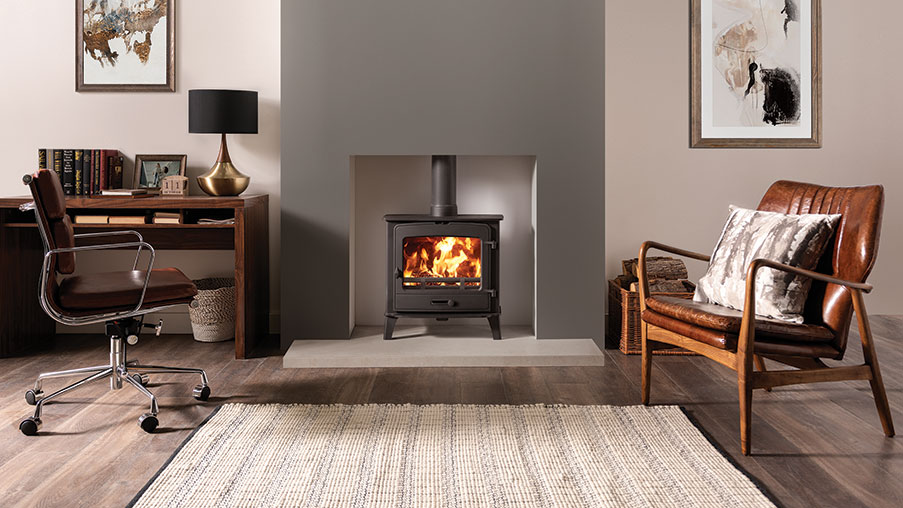
A sunny shade paired with a floral print instantly lifts a room. It feels fresh, classic, and comforting all at once, just like the warm glow of a wood-burning stove on a cool summer’s evening. Whether your style leans traditional or modern country, florals add softness and visual interest in all the right places.
Simple Updates with Big Impact
Not ready for a total redesign? No problem. Here are a few easy ways to work florals and bold colours into your home:
Cotton rugs with soft florals can anchor a room and add texture.
Cushions or curtains in a bright floral print introduce colour and pattern without overwhelming the space.
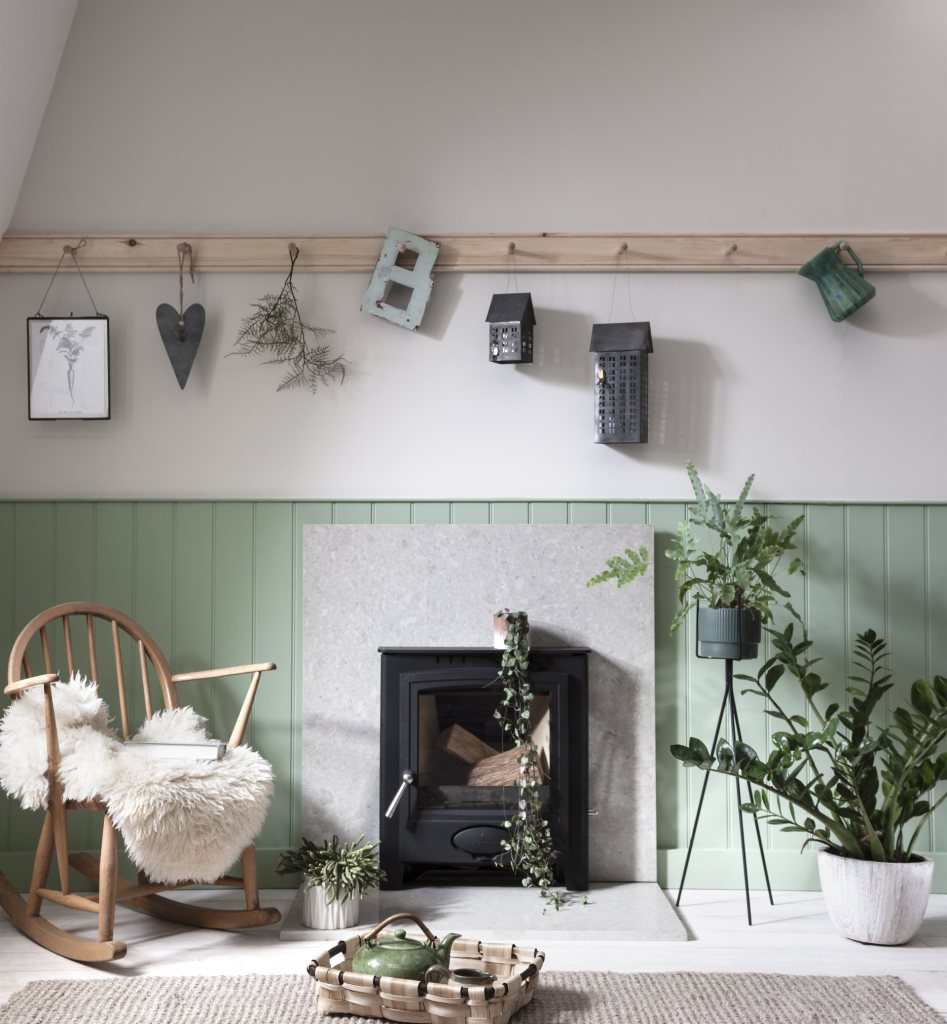
Painted woodwork (like skirtings or shelving) in a strong, harmonising colour can tie the whole look together beautifully.
These touches create a layered, inviting atmosphere, ideal for spaces where you wish to unwind, host guests, or nestle by the fire.
Top Tip
When choosing a bold paint colour, don’t shy away from strength, but think about coordination. Consider the tones in your flooring, your fabrics, and even your fireplace surround. Then bring it all together by painting connected woodwork like shelves, trims, or even the mantlepiece to create flow and unity.
Ready to Refresh Your Room?
Whether you’re rethinking your living room or adding finishing touches around a newly installed stove, floral fabrics and bold colour accents can make all the difference. Visit our showroom in Edinburgh or Fife for more timeless, character-filled ideas.
Living Fires – helping to create and inspire beautiful homes begin with warmth and style.
Just because your fire isn’t lit doesn’t mean it should fade into the background. At Living Fires, we believe your fireplace should be a showstopper all year round, not just in winter! Whether you’re in a period property in Edinburgh or a modern family home in Fife, your fireplace can be the heart of your room even when it’s not in use.
So, how do you turn a not-currently-in-use hearth into a summer-ready focal point? We’ve pulled together some easy, creative ideas to refresh your fireplace for the (hopefully) sunnier season.
Get Creative with the Hearth
When the fire’s off, the hearth is prime real estate for a bit of creative flair.
Here are a few ideas to get you started:
Candles in clusters – create a warm, flickering effect without the heat.
Fairy lights in a basket or glass lantern – soft lighting that adds summer sparkle.
A stack of vintage books or decorative logs can give a relaxed, stylish look.
Indoor plants in terracotta pots or hanging baskets bring a fresh, organic feel.
These small touches can breathe life into your living space while making the most of a feature you already love.
Dress It Up: Seasonal Styling Ideas
Just like you’d switch out cushions or throws for summer, your fireplace can get a seasonal glow-up too:
Hang a light, summery wreath on the chimney breast.
Use vases filled with fresh flowers, think wildflowers, hydrangeas or sunflowers.
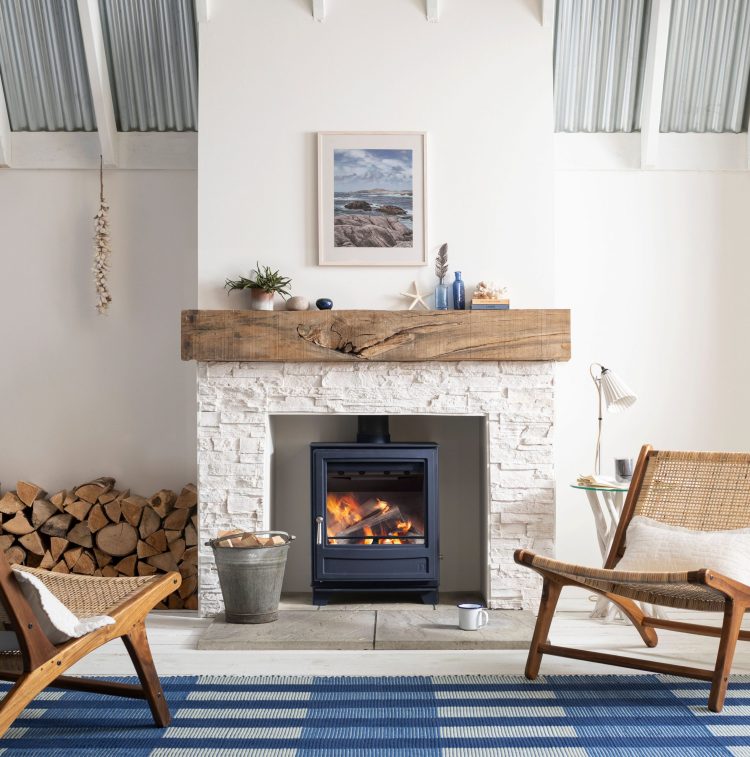
Try coastal-themed ornaments like driftwood, shells or glass bottles for a relaxed, beachy vibe.
A few subtle swaps can help your fireplace feel in tune with the season, without needing a full room makeover.
Refresh with Paint
If your surround or hearth is looking a little tired, a lick of paint can do wonders.
For a bright, airy look, consider a soft white or warm neutral to lighten the space.
Fancy a bolder touch? Muted blues, sage greens or even charcoal can give a modern, stylish edge while still working with your existing décor.
Top tip: Use heat-resistant paint if your fireplace is functional, and prep the area well for a clean finish.
Style Your Mantel for Summer
Your mantel is the perfect spot to express your personal style. During the warmer months, try:
Framed prints or mirrors with natural wood or whitewashed frames.
Lightweight fabrics like linen runners or bright, cotton bunting to soften the look.
Bowls of shells, colourfulcandle holders, or simple ceramics for texture and contrast.
Keep it light, bright, layered, and uncluttered for a calm, breezy feel.
Make the Most of a Non-Functional Fireplace
If your fireplace is purely decorative, you’ve got even more flexibility!
Place a large mirror inside the opening to reflect natural light and open up the space.
Lean or hang bold artwork in the centre to draw the eye.
Use the space as a display area and add a larger single statement item like a sculpture, vase or decorative object to fill the space without overcrowding it.
In Summary…
Your fireplace doesn’t need to go into hibernation over the summer. With a few thoughtful touches, you can turn it into a stunning seasonal centrepiece, perfect for laid-back evenings and enjoying a beautiful home that feels just right, all year round.
Need help finding the perfect surround or want to explore new styles? Pop into our Edinburgh or Fife showrooms. We’re here to help you make your fireplace a feature you’ll love, in every season.
Investing in a wood-burning stove is a fantastic way to bring warmth, comfort, and even a touch of rustic charm into your home. But as a new stove owner, it’s important to familiarise yourself with the various parts of your stove to ensure safe and efficient use. Here’s a helpful guide to understanding the key components of your wood-burning stove.
The Firebox
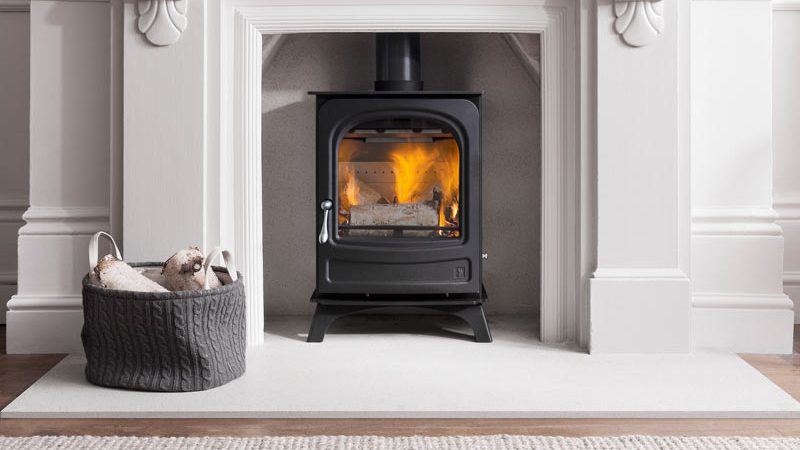
The firebox is the heart of your stove—this is where the magic happens. It’s the chamber where wood is burned to produce heat. Fireboxes are usually lined with firebricks or steel, materials that withstand the intense heat generated by burning wood. As a new stove owner, you’ll want to ensure that you only burn properly seasoned wood in the firebox to maximise efficiency and minimise creosote build-up. You can read more about selecting firewood here.
The Baffle
The baffle sits inside the top of the firebox and plays a crucial role in your stove’s efficiency. It’s designed to slow down the rising gases from the burning wood, allowing them to stay in the stove longer. This ensures that more heat is extracted and less heat escapes through the flue. It also helps reduce emissions, making your stove more eco-friendly. Over time, baffles can wear down, so it’s important to check and replace them when necessary.
The Air Vents
Wood-burning stoves typically have two or more air vents that control airflow into the firebox. These vents are key to managing your stove’s burn rate and efficiency. The primary air vent helps ignite the fire by feeding it oxygen, while the secondary air vent ensures efficient combustion by introducing air at a higher point in the firebox. Learning to adjust these vents allows you to control the heat output and burn time, ensuring you get the most from your fuel.
The Stove Door and Glass
The door of your stove serves both aesthetic and functional purposes. Its heat-resistant glass lets you enjoy the view of the fire while helping to maintain a controlled environment inside the firebox. New owners should check the glass gasket regularly, ensuring that the seal between the glass and the door is intact to prevent air leaks, which can affect stove performance.
The Flue Pipe and Chimney
The flue pipe carries smoke and gases away from the stove and up through the chimney. Proper maintenance of your flue is essential for safe operation, as creosote build-up can lead to chimney fires. As a new stove owner, you should have your flue and chimney cleaned regularly by a professional. This will not only ensure safety but also help your stove run more efficiently.
The Ash Pan
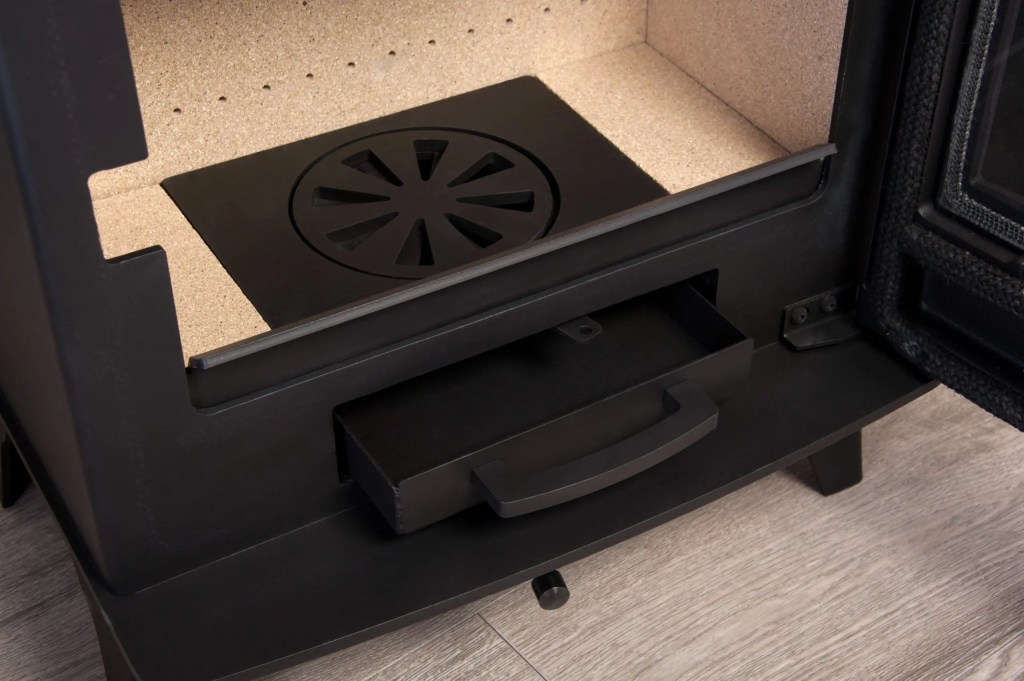
Located beneath the firebox, the ash pan collects ash and debris from the burned wood. Emptying the ash pan regularly is important to keep your stove running smoothly. Many models have a removable ash pan, making it easy to clean out without disturbing the fire.
The Damper
Not all wood-burning stoves have dampers, but if yours does, it’s an important tool for controlling airflow. A damper is a plate or valve in the flue that can be opened or closed to control the stove’s burn rate. An open damper allows more air into the stove, increasing the intensity of the fire. Closing it slows down the burn, helping retain heat in your home.
Understanding the different parts of your wood-burning stove is the first step to mastering its use. From the firebox to the flue pipe, each component plays a vital role in ensuring safe, efficient heating. By learning how to operate and maintain these parts, you’ll get the most out of your stove and enjoy a warm, cosy home.
Welcome to Living Fires, your local independent business dedicated to transforming homes across Scotland with warmth, style, and a touch of elegance. Established in 1991, we’ve spent over three decades helping homeowners create cosy, beautiful spaces with our expertly designed and installed fireplaces.
More Than Just a Showroom
At Living Fires, we pride ourselves on being more than just another sales showroom. Our mission is to guide you through every step of your fireplace journey—from the initial design to the final post-installation clean. We manage your project from concept to completion, ensuring a stress-free experience tailored to your unique needs.
Comprehensive Services for Complete Peace of Mind
We provide a full-service experience that covers everything from planning to taping and plastering. Our team works with only the best tradespeople, guaranteeing that your fireplace will exceed your expectations in both functionality and aesthetics. Whether you’re looking for a modern centerpiece or a traditional stove, we have the expertise to bring your vision to life.
Transforming Your Home Environment
A fireplace is more than just a source of heat—it’s the heart of your home. We help you choose a fire that is both aesthetically inspiring and practical, ensuring it complements your space perfectly. Our team focuses on effective communication and collaboration from the very beginning, ensuring we deliver a unique fireplace that fulfills your expectations and enhances your home.
Why Choose Living Fires?
Established in 1991: Over 30 years of experience in the industry.
Two Convenient Showrooms: Visit us in Dunfermline or Edinburgh.
Project Management: We handle everything from concept to completion.
Certified and Trusted: Members of the National Fireplace Association, HETAS, FSB, and Gas Safe registered.
Comprehensive Product Range: Fires, fireplaces, outdoor fires, stoves, accessories, and more.
We even take care of building warrants if needed, so you can sit back and relax while we handle the details.
Get in Touch
Are you ready to transform your living space with a stunning new fireplace? Look no further than Living Fires. Our team is here to help you find the perfect fire for your home, combining quality, good design, and exceptional service. Contact us today or visit one of our showrooms for more information on our extensive range of products.
Let Living Fires bring warmth and style to your home—because we’re more than just your average fireplace store!
Well done! You’ve selected your new stove but now you need to decide how you’re going to mount it.
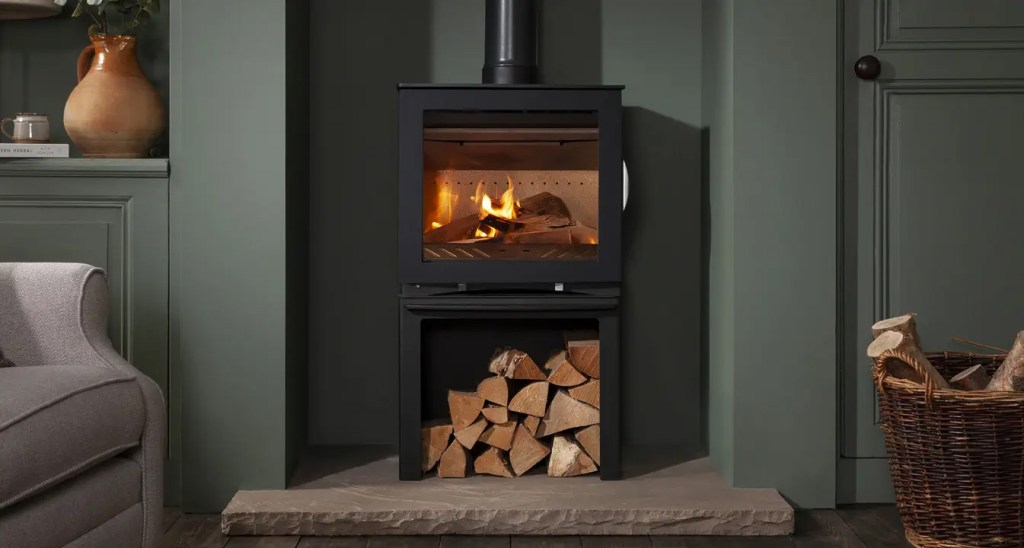
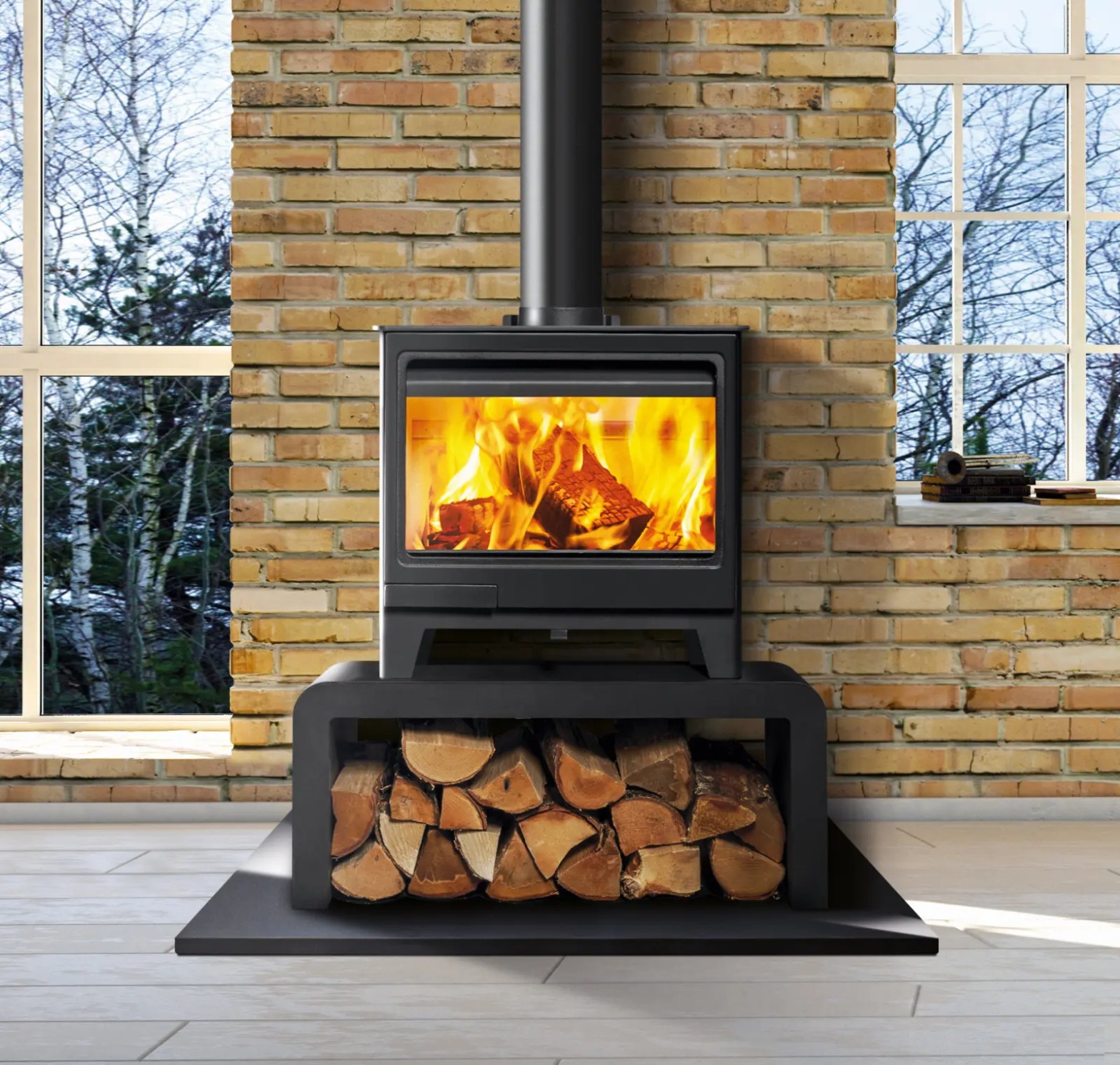
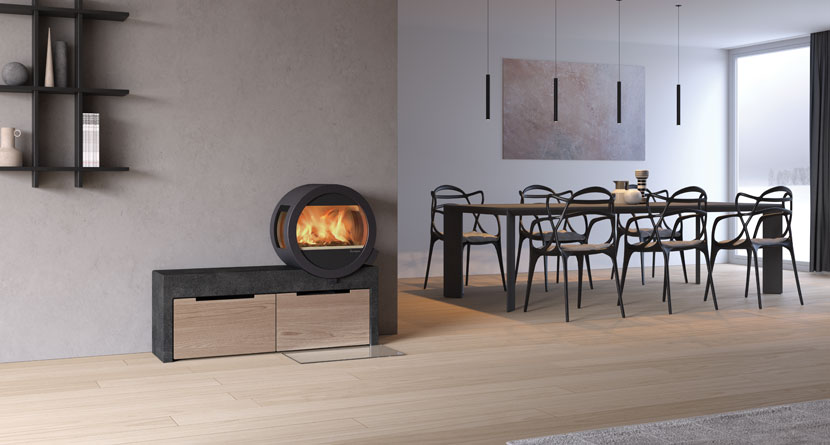
With many options from pedestals and steel log store stands to benches and even stylish clear glass stands there is so much available. Some stoves even have the option to be wall mounted or ceiling hung, for a statement stove installation. Each mounting option transforms the final look, letting you choose the perfect match for your stove and your home.
Below we take a closer look at traditional hearth options and the alternative steal benches.
HEARTHS
Okay, strap in, this is going to get technical. Got a coffee? Biscuits?
A hearth is designed to protect a building and occupants from a solid fuel appliance. Basically, hearths are to prevent the floor surface around your stove going on fire, either by heat from the stove or from fuel falling out when you open a door. Wood burning multi-fuel stoves need a hearth made from non-combustible material, this usually means a slab of stone or concrete that is higher than the floor around it and corresponds to the appliance’s hearth requirements.
There are set rules about hearths and stove installation. The rules are different if the stove is being inserted into a fireplace recess rather than if the stove is to be “freestanding” outside of the usual stove recess (e.g. a modern stove connected to a twin wall flue that exits the building via the ceiling or wall of the room).
Rules for hearths consist of two elements:
Constructional hearth: An area, around and underneath the stove, of non-combustible material. This can be the floor of the room if the floor is non-combustible (so a concrete floor or slate tiled floor can essentially mean the whole floor of the room is a massive constructional hearth).
Superimposed Hearth (sometimes called a Visual Warning Area): A superimposed hearth acts as a visual warning of a “restricted area” around the stove – a warning to suggest: “do not place any combustible items in this area or carpet over it”. Superimposed hearths are often made of slate or tiles.
Added together the constructional hearth and superimposed hearth must have a combined depth of 125mm (5″). However, some modern stoves can have this reduced to 12mm. The requirement for a 12mm hearth installation typically occurs when the room that you wish to install in has no available chimney or fireplace. If you are planning to install your freestanding stove into this particular type of room, it is essential to have a hearth placed below the stove to allow a safe distance to combustible materials to be maintained. Many stoves in our range have been designed to only require a 12mm hearth, allowing for a sleek installation. These minimal hearths are often created from special toughened glass to help them blend in with your interior.
We also have a wide selection of beautiful, traditional stone hearths including small or large sizes. The larger sizes are commonly styled with a slight overhang and the small features flush edges.
The decision on the type of hearth that you may need is dependent on the type of stove that you plan to install. We are on hand to advise you on which type of hearth is needed.
BENCHES
If you are looking for an accessory that will create a focal point that will leave everyone talking, consider mounting your wood burning stove on a steel bench.
To assist homeowners in creating an adaptable alternative to the ‘on hearth’ mounting of contemporary stoves, we offer several sizes of bench to which the stoves may be secured.
A great accessory and alternative to hearth mounting, steel benches can create a dramatic look for your new stove. Offered in a variety of sizes, you can be sure to find something no matter the dimensions of your wood burner! Standing at 250mm or 350mm high with 60mm wide legs, you can not only match the bench to the space available within your home but you can match it to your unique style by positioning your wood burning stove either centrally or offset to one side.
Depending on the colour of your stove the matt finish of your steel bench can either complement it perfectly or create a striking contrast, both are equally sure to make a fantastic statement.
A lack of a traditional chimney doesn’t mean you have to forgo the cosy ambiance of a fireplace or stove. Modern homes without chimneys can still enjoy the warmth and charm of a fire with the availability of gas and electric alternatives. In this informative blog, we’ll explore the options of gas and electric fireplaces as well as gas and electric stoves, discussing their features and the installation processes involved.
Gas Fireplaces:
The Onyx Eclipse gas fire (Part of the Stovax Heating Group)
Features:
Gas fireplaces offer the beauty of a real flame without the need for a traditional chimney. They come in various designs, including built-in, wall-mounted, and freestanding models.
Installation:
Gas fireplaces require professional installation, usually involving the connection to a gas line. Venting options include direct vent, vent-free, or power vent systems, providing flexibility in placement within your home.
Electric Fireplaces:
Ellere Electric Fire from Arada Stoves
(Suitable for home built after April 2024)
Features:
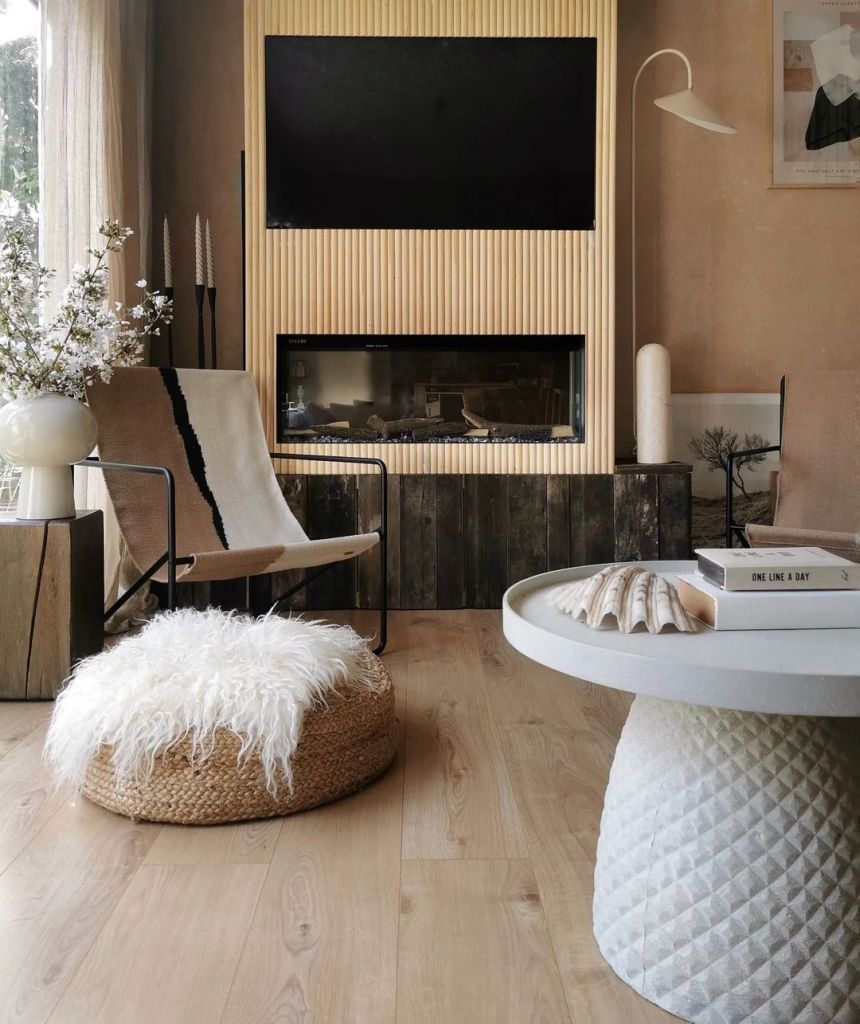
Electric fireplaces have gained popularity for their convenience and versatility. They come in a range of styles, from traditional mantelpiece designs to modern wall-mounted units. Electric fireplaces offer flame effects and often come with a heater for added warmth.
Installation:
One of the key advantages of electric fireplaces is their easy installation. Most models simply need to be plugged into a standard electrical outlet, making them a convenient option for homes without chimneys.
Gas Stoves:
Charlton and Jenrick Paragon Edge Conventional Flue Gas Stove
Features:
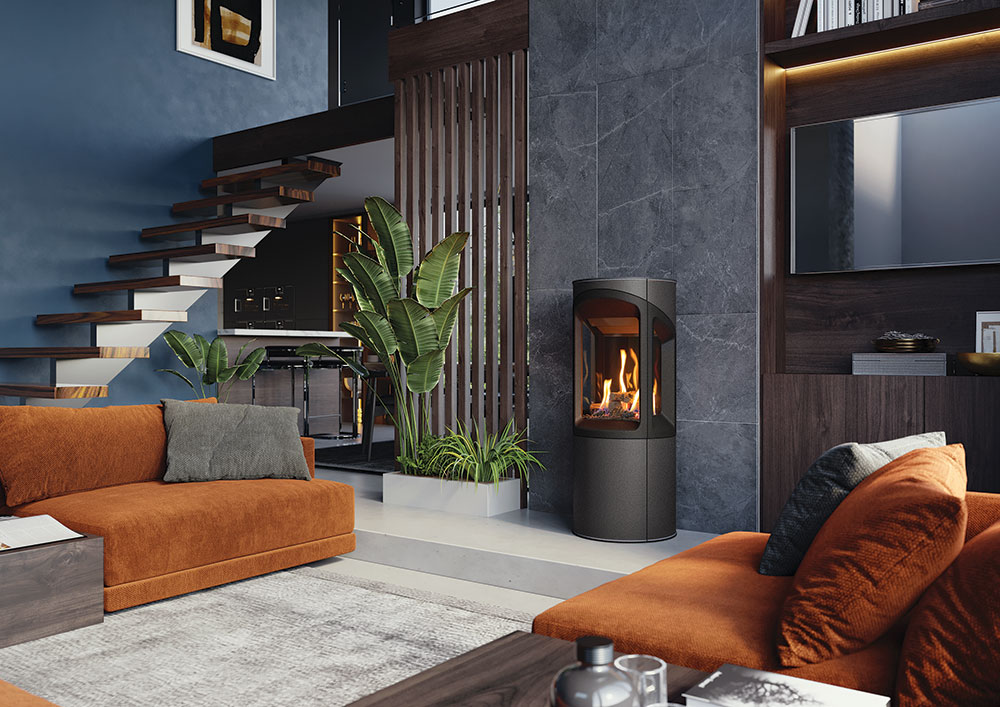
Gas stoves bring the charm of a traditional wood-burning stove without the need for a chimney. They are available in various styles, including classic and contemporary designs, and can be freestanding or built into an existing fireplace space.
Installation:
Similar to gas fireplaces, gas stoves require professional installation. The process involves connecting the stove to a gas line and, depending on the model, may involve venting options such as direct vent or vent-free systems.
Electric Stoves:
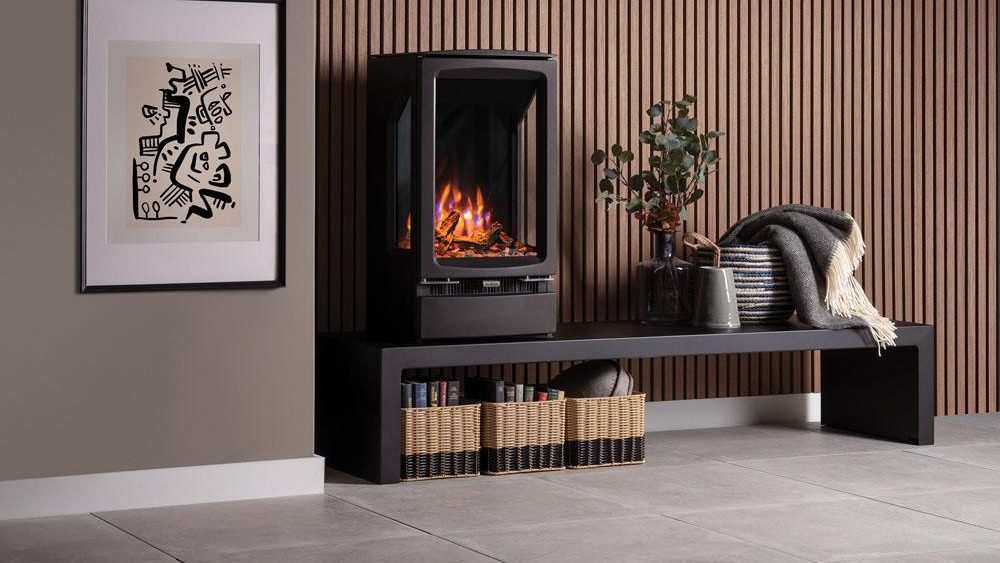
Stovax Vogue Midi T Electric Stoves
(Suitable for home built after April 2024)
Features:
Electric stoves offer a hassle-free alternative to their gas counterparts. With various styles to choose from, including freestanding and compact models, electric stoves provide the warmth of a traditional stove without the need for a chimney.
Installation:
Like electric fireplaces, electric stoves are incredibly easy to install. They only require access to a standard electrical outlet, eliminating the need for complex venting systems.
Choosing the right fire for your home without a chimney involves considering your preferences, the date your property was built, the available space, and the desired aesthetic. Gas fireplaces and stoves provide the authenticity of a real flame, while electric alternatives offer convenience and easy installation. Regardless of your choice, professional installation ensures safety and optimal performance, allowing you to enjoy the warmth and ambiance of a fire in your home, chimney or not.
For wood-burning stove owners, maximising the heat output from your stove is essential, especially during colder months. One popular and simple way to enhance your stove’s efficiency is by using a stove fan. If you’re new to stove ownership, here’s everything you need to know about what stove fans do, how to install them, and the types of homes or spaces they are best suited for.
WHAT ARE STOVE FANS FOR?
A stove fan is a small, heat-powered device designed to distribute the warm air generated by your stove more evenly throughout the room. Without a fan, the heat from your stove tends to rise straight up, creating hot spots near the stove and leaving the rest of the room cooler. Stove fans circulate this warm air horizontally, helping to spread heat more efficiently. This means you can enjoy a more even temperature in your home without needing to crank up the fire, saving you fuel in the process.
HOW TO INSTALL A STOVE FAN
Installing a stove fan is incredibly easy. These fans are self-powered, so they don’t require any batteries or electrical cords. They work using the heat from the stove itself, with most models starting to spin automatically once the stove reaches a certain temperature (usually around 50°C/122°F).
TO INSTALL:
1. Place the fan on top of the stove: Make sure it’s in a location where it can get direct heat but not so close to the chimney or flue pipe that it overheats.
2. Ensure proper distance: Leave enough space behind the fan for airflow. Fans work best when they can draw cool air from the back and push warm air forward.
3. Monitor for overheating: Most stove fans are designed to operate safely at high temperatures, but it’s important to follow the manufacturer’s guidelines to avoid any potential damage.
WHAT HOMES AND SPACES ARE STOVE FANS BEST SUITED FOR?
Stove fans are especially useful in smaller rooms or open-plan spaces where heat can quickly build up near the stove. They’re also ideal for cabins, cottages, and conservatories where distributing heat more evenly can make a big difference. For homes with large, open spaces, a stove fan may not cover the entire area, but it can still help increase overall warmth in the vicinity of the stove.
Stove fans are an affordable, energy-efficient way to get more out of your wood-burning stove. By installing one, you’ll enjoy better heat distribution, increased comfort, and potentially lower fuel costs, all while keeping your space cosy and warm.
Our showrooms stock a selection of stove fans along with flue thermometers. We also have a host of other accessories to keep stoves well-maintained and functioning at their best such as door ropes, high-temperature paints and slate oil.
As the chill of winter begins to fade and the promise of some warmer days approaches, it’s easy to forget about the hearth that kept you cosy during the colder months. However, neglecting your chimney and fireplace during the spring can lead to issues when winter returns. In this blog, we’ll share hints and tips on how to properly maintain and prepare your chimney and fireplace in the spring, ensuring they’re ready for hibernation until the next winter season.
SCHEDULE A CHIMNEY SWEEP
Before stowing away all your fireplace tools and tidying away the log basket, schedule a chimney sweep. A professional sweep can identify potential issues and ensure your chimney is in optimal condition.
If your sweep recommends a new chimney liner kit, we are on hand to help and advise you for all your fireplace needs with comprehensive and expert knowledge.
INCLUDE CHIMNEY CLEANING IN YOUR SPRING ROUTINE
As you start working your way through your spring-cleaning checklist, don’t forget about the fireplace and chimney. While it’s not necessary to clean it immediately after the last snowfall, adding it to your list is a sensible move.
Clearing away any residual soot, debris, or creosote buildup is crucial for preventing potential fire hazards and maintaining the longevity of your fireplace.
ANNUAL CLEANING FOR YEAR-ROUND FUNCTIONALITY
Make chimney and fireplace cleaning an annual tradition. Regular maintenance prevents operational issues and keeps your fireplace ready for use when winter returns. Neglecting this routine can lead to costly repairs and render your fireplace inoperable when you need it most.
PREPARATION FOR NEW INSTALLATIONS
If you’re considering installing a new fire or fireplace, it’s advisable to have your existing chimney or flue swept or checked beforehand. At Living Fires, we recommend Lee David a certified chimney sweep who also has camera equipment for checking out flues. He covers both Edinburgh and Fife and can be contacted on 07930 748367.
Alternatively, if you live outwith these regions, please visit the National Association of Chimney Sweeps website (www.nacs.org.uk) or call 0800 833464 to find a registered chimney sweep in your area.
As you bid farewell to the winter fires and welcome the warmer months, taking the time to properly prepare your chimney and fireplace for the next season is a wise investment. Whether it’s scheduling a chimney sweep, incorporating cleaning into your spring routine, or preparing for new installations, these tips ensure your hearth remains in top condition. Remember, a little maintenance now can save you from headaches and expenses when it’s time to relight your fire.
Resolution #1: Start 2025 in style with a fresh new look!
The new year is here, and it’s the perfect time to reimagine your home’s interiors. Whether you’re looking to update your living space or enhance the warmth and charm of your fireplace or stove, the Colours of the Year for 2025 are here to inspire you. This year’s trending hues offer something for everyone, from soothing neutrals to zesty pastels. Let’s explore the standout shades from Pantone, Dulux and Etsy to see how they can transform your space.
Pantone Colour of the Year: Mocha Mousse (PANTONE 17-1230)
Pantone’s 2025 pick, Mocha Mousse, is a rich, warming brown that radiates comfort and sophistication. This delectable shade captures the essence of chocolate and coffee, delivering a sense of thoughtful indulgence and timeless elegance. Mocha Mousse is versatile enough to suit any style, whether you’re aiming for minimalist chic or a more opulent design.
Pantone has curated several inspiring palettes featuring this hue, including “Relaxed Elegance” and “Floral Pathways. “ It is a great choice for pairing with soft pastels and bold accents. Imagine this luscious shade framing your fireplace or stove, creating a cosy and inviting focal point in your home.
Dulux Colour of the Year: True Joy
Dulux’s True Joy is a cheerful, uplifting yellow that brings energy and optimism into any space. Designed to inspire creativity and pride, this vibrant hue is perfect for brightening up modern and traditional interiors. Its sunny tone beautifully complements natural light, making it an excellent choice for highlighting the area around your stove or fireplace.
True Joy works particularly well in Scottish homes, where natural daylight can sometimes feel … sparse. Pair it with softer neutrals or earthy tones to create a harmonious and inviting look.
Etsy Colour of the Year: Lime Cream
Etsy’s 2025 colour, Lime Cream, is a delicate pastel with a zesty twist. Equal parts calming and playful, this dreamy shade offers versatility as a neutral base or as part of a bolder colour scheme.
Think of Lime Cream as the perfect backdrop for soft furnishings, decorative accessories, or even your fireplace surround. This fresh hue can brighten up your space while maintaining a soothing vibe, perfect for layering with other colours to suit your style. Picture Lime Cream walls accented with vibrant cushions or a chic fire surround to bring a touch of pastel perfection into your living room.
Incorporating the Colours of the Year into Your Fireplace Design
At Living Fires, we understand the importance of creating a warm and stylish home. These Colours of the Year provide endless opportunities to refresh your fireplace or stove setup. Here are a few tips to incorporate these trending shades into your design:
Feature Walls: Use Mocha Mousse, True Joy, or Lime Cream as a backdrop to highlight your fireplace. These shades can enhance the warmth and character of your living space.
Accessories: Add colour through cushions, rugs, or throws near your stove or fireplace. True Joy’s uplifting yellow or Lime Cream’s pastel charm can create a cohesive look without overpowering the room.
Fireplace Surrounds: Consider repainting your fire surround in one of these trendy hues to make it a standout feature. Mocha Mousse, for example, brings timeless elegance and a sense of grounding to any room.
Layered Palettes: Pair these colours with complementary shades for added depth. Lime Cream works beautifully with bold jewel tones, while True Joy pairs seamlessly with natural woods and greys.
Ready to Transform Your Space?
Whether you’re embracing the rich warmth of Mocha Mousse, the sunny optimism of True Joy, or the playful zest of Lime Cream, 2025’s Colours of the Year can elevate your interiors. At Living Fires, we’re here to help you create a space that’s not only warm and welcoming but also on-trend and uniquely yours.
Visit our showrooms in Edinburgh and Fife for expert advice and inspiration. Let’s make your home a haven of style and comfort this year.
Living Fires – Bringing Warmth and Style to Scottish Homes Since 1991
It goes without saying that lockdown affected the design of our homes. It brought about a revolution in the way we think about home and many more of us now need permanent and flexible home-working areas in energy-efficient spaces.
Before the coronavirus lockdown, 70 per cent of Brits had never worked from home, according to the Office for National Statistics. Fast forward to today and the pandemic has resulted in an estimated 20 million people swapping crowded and long journeys for smooth 10-second commutes to makeshift workspaces on kitchen worktops or the dining table. Waking up at your ‘workplace’ has become a normal way of working for at least 1 day a week for many of us. We are now more aware than ever of the need for multifunctional spaces for living and working.
One of the biggest perks of working from home is the greater flexibility. With the ability to work from any room, those working from home can take advantage of this and create a flexible schedule to take care of work and personal responsibilities. But how do you get the balance right?
Well, we’ve found the key, flexible spaces are the future. How you might ask? Making spaces work for multiple occasions is critical to being able to fully use your home for its all its purposes. Creating multiple workspaces throughout the home means that two or more people can work from home at the same time without bothering each other, no matter how they’re designing their schedules. We love these top tips for creating multifunctional spaces by interior designer Samantha Watkins Mcrae;
A children’s bedroom can be an area for play and learning with fun considered, multipurpose storage units and a bed that moves.
A kitchen island can entertain guests yet still provide a working desk option
Flexible desk space in a living room or dining room can be tidied away when not in use, even if it’s only a fold-up desk squeezed into an unused corner.
Sliding doors and dividers can be installed (should a wall cavity allow) to hide an office or gym area.
It’s all about making your home fit its purposes and creating more space. Spaces to be apart and work in peace and spaces to come together and relax. Creative storage built into bespoke seating and maximising cupboard space in the kitchen from floor to ceiling is already becoming a key trend, as are other creative storage solutions like under bench storage and hallway storage.
Spending more time in our homes – and higher utility bills – means many of us are also prioritising energy efficiency and sustainability in the home. Including a fireplace in your home improvements could help you achieve this. Installing an electric fire in the rooms where you spend a long time sitting for extended periods is a great way to regulate the heat in the room as you need. Electric fires can be used with the heat on or off. This means if you start to get a little chilly and want some localised heat in the room, it’s a great way to warm up without turning the central heating on. Likewise, if you just enjoy the comforting ambience but it’s also the height of summer, simply select the stove to function without the heat and you’re left with a beautiful and calming flame display, a great background feature for all those zoom calls!




















 Living Fires