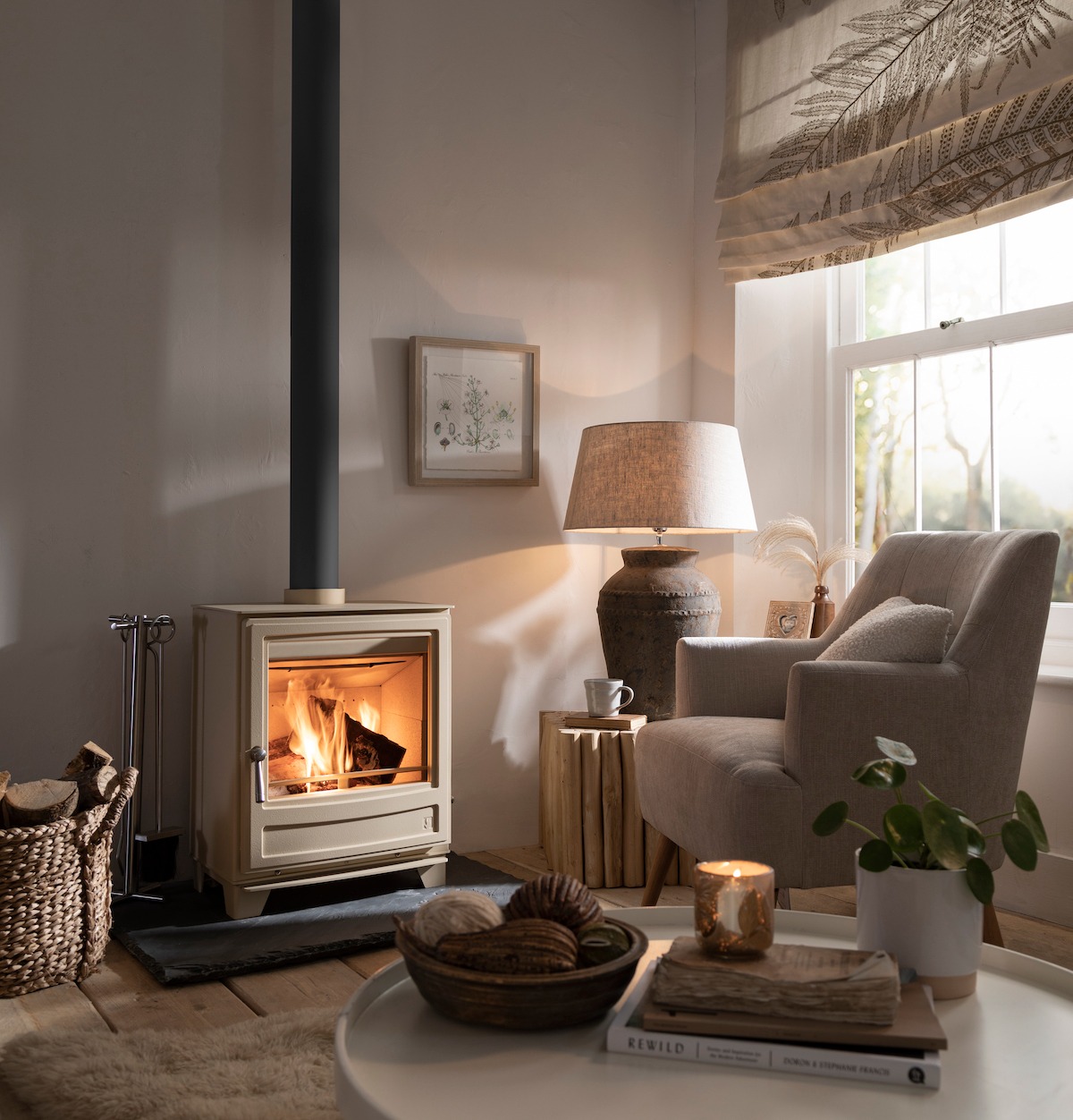
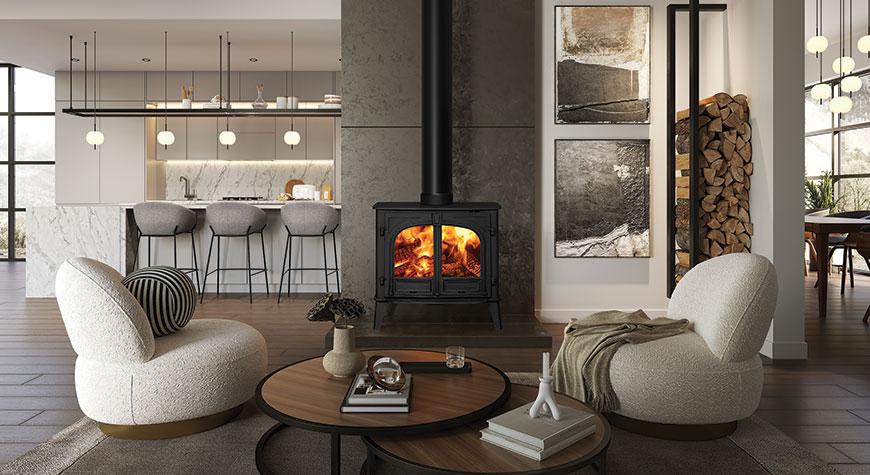
Investing in a wood-burning stove is a fantastic way to bring warmth, comfort, and even a touch of rustic charm into your home. But as a new stove owner, it’s important to familiarise yourself with the various parts of your stove to ensure safe and efficient use. Here’s a helpful guide to understanding the key components of your wood-burning stove.
The Firebox
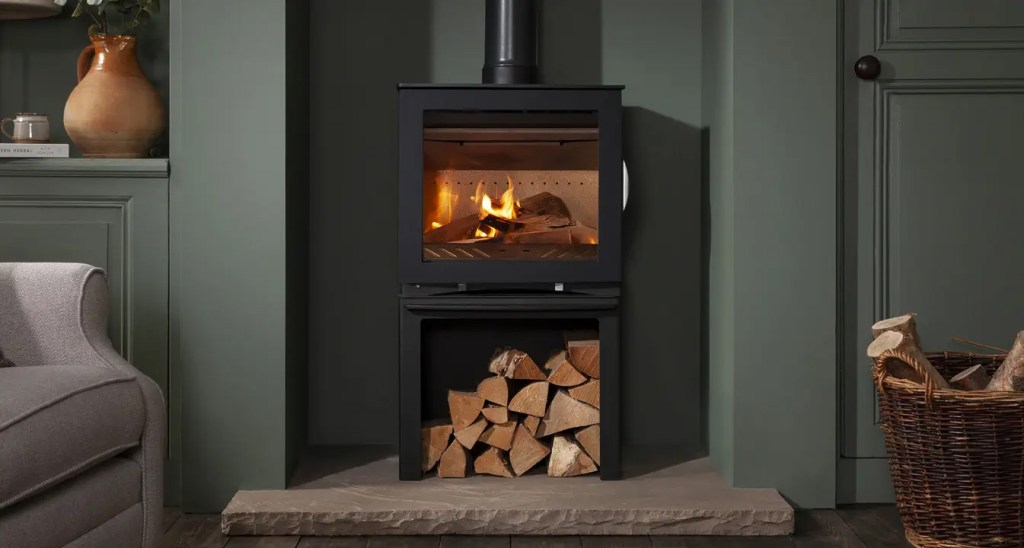
The firebox is the heart of your stove—this is where the magic happens. It’s the chamber where wood is burned to produce heat. Fireboxes are usually lined with firebricks or steel, materials that withstand the intense heat generated by burning wood. As a new stove owner, you’ll want to ensure that you only burn properly seasoned wood in the firebox to maximise efficiency and minimise creosote build-up. You can read more about selecting firewood here.
The Baffle
The baffle sits inside the top of the firebox and plays a crucial role in your stove’s efficiency. It’s designed to slow down the rising gases from the burning wood, allowing them to stay in the stove longer. This ensures that more heat is extracted and less heat escapes through the flue. It also helps reduce emissions, making your stove more eco-friendly. Over time, baffles can wear down, so it’s important to check and replace them when necessary.
The Air Vents
Wood-burning stoves typically have two or more air vents that control airflow into the firebox. These vents are key to managing your stove’s burn rate and efficiency. The primary air vent helps ignite the fire by feeding it oxygen, while the secondary air vent ensures efficient combustion by introducing air at a higher point in the firebox. Learning to adjust these vents allows you to control the heat output and burn time, ensuring you get the most from your fuel.
The Stove Door and Glass

The door of your stove serves both aesthetic and functional purposes. Its heat-resistant glass lets you enjoy the view of the fire while helping to maintain a controlled environment inside the firebox. New owners should check the glass gasket regularly, ensuring that the seal between the glass and the door is intact to prevent air leaks, which can affect stove performance.
The Flue Pipe and Chimney

The flue pipe carries smoke and gases away from the stove and up through the chimney. Proper maintenance of your flue is essential for safe operation, as creosote build-up can lead to chimney fires. As a new stove owner, you should have your flue and chimney cleaned regularly by a professional. This will not only ensure safety but also help your stove run more efficiently.
The Ash Pan
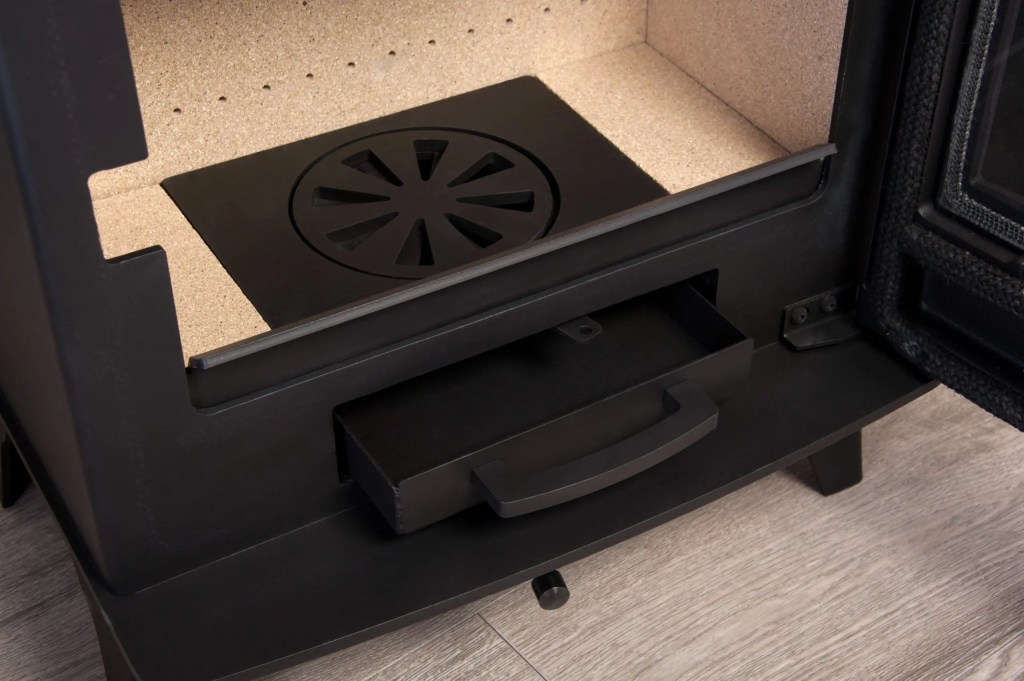
Located beneath the firebox, the ash pan collects ash and debris from the burned wood. Emptying the ash pan regularly is important to keep your stove running smoothly. Many models have a removable ash pan, making it easy to clean out without disturbing the fire.
The Damper

Not all wood-burning stoves have dampers, but if yours does, it’s an important tool for controlling airflow. A damper is a plate or valve in the flue that can be opened or closed to control the stove’s burn rate. An open damper allows more air into the stove, increasing the intensity of the fire. Closing it slows down the burn, helping retain heat in your home.
Understanding the different parts of your wood-burning stove is the first step to mastering its use. From the firebox to the flue pipe, each component plays a vital role in ensuring safe, efficient heating. By learning how to operate and maintain these parts, you’ll get the most out of your stove and enjoy a warm, cosy home.
 Living Fires